
Most of us imagine time as a river outside us. We picture events drifting past while we stand on the bank, measuring losses, deadlines, and transitions. Kant reverses that picture. Time is not a container we discover in the world. It is the form through which our inner life is arranged at all.
That is why the problem of time is not abstract. It touches memory, anxiety, pacing, anticipation, regret, and change. The world may supply events, but the experience of before, after, and now belongs to the structure of sensibility itself.
This suite follows Kant’s argument in three layers: the primary texts, a learner blueprint, and a practical narrative about what it means to live inside a mind that can only experience itself sequentially.
Kant’s first move is deceptively simple: time cannot be copied from experience, because experience already presupposes it. You do not first notice bare events and only later infer succession. Rather, the ability to register coexistence and succession already depends on a prior temporal frame.
If you can say “this happened before that,” you are already using a structure you did not learn from those two events alone.
That is why time is not like colour, taste, or pressure. Those vary with what affects us. Time is the condition under which any variation can be noticed in the first place.
Kant says different times are not simultaneous but successive. We cannot hold two moments as two independent objects under one concept in the way we classify “trees” or “chairs.” Every determinate time is a limitation of one encompassing time.
That is why we constantly draw timelines, calendars, schedules, and progress bars. They are not arbitrary metaphors. They are attempts to externalize the one-dimensional order through which inner life is given.
- When you replay a conversation, you replay a sequence.
- When you dread tomorrow, you project a sequence.
- When you say you are “stuck,” you are describing a temporal structure, not just a mood.
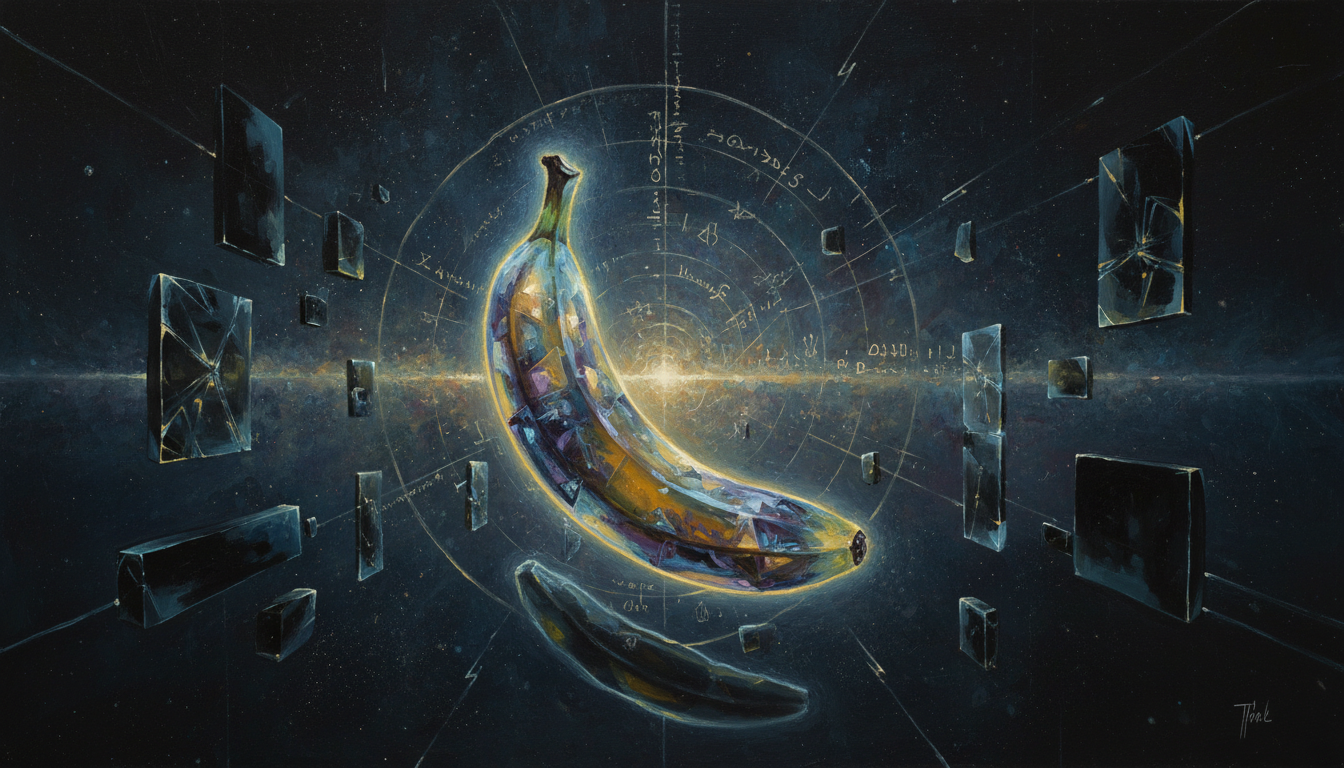
Alteration only becomes intelligible if opposed predicates can belong to the same thing one after the other. A door can be closed and then open; a person can be afraid and then relieved. Without time, contradiction and change would collapse into nonsense.
The practical lesson is not “time is fake.” It is nearly the opposite. Time is empirically real for every appearance we can ever experience. But it is not an absolute feature of things-in-themselves. It is the formal condition through which our experience of ourselves and of the world becomes ordered.
So when life feels like pressure from the clock, Kant invites a subtler thought: the clock on the wall is only legible because there is already a clock within.
The next time you say “I don’t have time,” pause and separate two things: the external schedule and the inner sequence through which you are arranging your own state. Kant’s claim is not that deadlines vanish. It is that the very intelligibility of pressure, change, waiting, and movement depends on the temporal form of sensibility.
That realization does not remove limits. It clarifies where limits become experience.
Kant's discussion of time does not ask whether clocks are accurate. It asks what must already be true of the subject if coexistence, succession, change, and motion are ever to be thinkable.
The answer: time is not borrowed from experience. It is the pure form of inner sense.
Kant's first proof is transcendental in shape. If we needed experience in order to derive time, then we would first have to register coexistence and succession without already using temporal order. But that is impossible. The distinction between “simultaneous” and “successive” is itself temporal.
| Claim | Why it matters |
|---|---|
| Time is not empirical | Experience presupposes temporal ordering instead of generating it. |
| Time is necessary | Appearances may disappear, but time as condition cannot be removed. |
| Time is a priori | Its universality and necessity cannot come from habit alone. |
Different times are not species under a genus called “time.” They are parts of one and the same time. That is why Kant says time is not discursive. Concepts classify many instances under common marks; intuition gives a single whole within which parts are determined by limitation.
- If time were a concept, its parts would stand under it as examples.
- But determinate times are only possible as limitations of one underlying temporal whole.
- Therefore the representation of time behaves like intuition, not like concept-classification.
Kant's conclusion is two-sided. Negatively, time is not a self-subsistent property of things-in-themselves. Positively, it is the form under which the mind intuits itself and its states.
This explains why alteration is intelligible. The same thing can bear opposed predicates only successively. Without the form of time, motion and change would not merely be hard to measure; they would be impossible to think.
Space orders what appears as outside us. Time orders what appears in the inner relation of representations.
Time has empirical reality because every appearance we can encounter must appear temporally. Yet it has transcendental ideality because, once we abstract from our sensible mode of intuition, time cannot be attributed to things as they are in themselves.
That is the blueprint: time is necessary for experience, singular in form, and rooted in inner sense.
1) Die Zeit ist kein empirischer Begriff, der irgend von einer Erfahrung abgezogen worden. Denn das Zugleichsein oder Aufeinanderfolgen würde selbst nicht in die Wahrnehmung kommen, wenn die Vorstellung der Zeit nicht a priori zum Grunde läge. Nur unter deren Voraussetzung kann man sich vorstellen: daß einiges zu einer und derselben Zeit zugleich oder in verschiedenen Zeiten nach einander sei.
2) Die Zeit ist eine nothwendige Vorstellung, die allen Anschauungen zum Grunde liegt. Die Zeit selbst kann man nicht aufheben, ob man zwar ganz wohl die Erscheinungen aus der Zeit wegnehmen kann.
3) Auf diese Nothwendigkeit a priori gründet sich auch die Möglichkeit apodiktischer Grundsätze von den Verhältnissen der Zeit. Sie hat nur eine Dimension: verschiedene Zeiten sind nicht zugleich, sondern nach einander. Diese Grundsätze können aus der Erfahrung nicht gezogen werden, denn diese würde weder strenge Allgemeinheit noch apodiktische Gewißheit geben.
4) Die Zeit ist kein discursiver oder allgemeiner Begriff, sondern eine reine Form der sinnlichen Anschauung. Verschiedene Zeiten sind nur Theile eben derselben Zeit.
– Seite 035 / 037 –
5) Die Unendlichkeit der Zeit bedeutet nichts weiter, als daß alle bestimmte Größe der Zeit nur durch Einschränkungen einer einigen zum Grunde liegenden Zeit möglich sei.
a) Die Zeit ist nicht etwas, was für sich selbst bestände, oder den Dingen als objective Bestimmung anhinge. Dieses letztere findet dagegen sehr wohl statt, wenn die Zeit nichts als die subjective Bedingung ist, unter der alle Anschauungen in uns statt finden können.
b) Die Zeit ist nichts anders, als die Form des innern Sinnes, d. i. des Anschauens unserer selbst und unsers innern Zustandes. Sie gehört weder zu einer Gestalt oder Lage; dagegen bestimmt sie das Verhältniß der Vorstellungen in unserm innern Zustande.
– Seite 036 / 038 –
c) Die Zeit ist die formale Bedingung a priori aller Erscheinungen überhaupt. Die Zeit ist eine Bedingung a priori von aller Erscheinung überhaupt und zwar die unmittelbare Bedingung der inneren und eben dadurch die mittelbare der äußeren Erscheinungen.
4) Die Zeit ist kein discursiver oder, wie man ihn nennt, allgemeiner Begriff, sondern eine reine Form der sinnlichen Anschauung. Verschiedene Zeiten sind nur Theile eben derselben Zeit. Auch würde sich der Satz, daß verschiedene Zeiten nicht zugleich sein können, aus einem allgemeinen Begriff nicht herleiten lassen. Der Satz ist synthetisch und kann aus Begriffen allein nicht entspringen.
5) Die Unendlichkeit der Zeit bedeutet nichts weiter, als daß alle bestimmte Größe der Zeit nur durch Einschränkungen einer einigen zum Grunde liegenden Zeit möglich sei.
– Seite 057 / 059 – Der Begriff der Veränderung und mit ihm der Begriff der Bewegung ist nur durch und in der Zeitvorstellung möglich. Wenn diese Vorstellung nicht Anschauung a priori wäre, könnte kein Begriff die Möglichkeit einer Veränderung begreiflich machen. Nur in der Zeit können beide contradictorisch entgegengesetzte Bestimmungen in einem Dinge, nämlich nach einander, anzutreffen sein.
a) Die Zeit ist nicht etwas, was für sich selbst bestände, oder den Dingen als objective Bestimmung anhinge. Dieses letztere findet dagegen sehr wohl statt, wenn die Zeit nichts als die subjective Bedingung ist, unter der alle Anschauungen in uns stattfinden können.
b) Die Zeit ist nichts anders als die Form des innern Sinnes, d. i. des Anschauens unserer selbst und unseres innern Zustandes.
– Seite 058 / 060 – Die Zeit kann keine Bestimmung äußerer Erscheinungen sein; sie gehört weder zu einer Gestalt, oder Lage etc.; dagegen bestimmt sie das Verhältniß der Vorstellungen in unserm innern Zustande. Wir stellen die Zeitfolge durch eine ins Unendliche fortgehende Linie vor, in welcher das Mannigfaltige eine Reihe ausmacht, die nur von einer Dimension ist. Hieraus erhellt auch, daß die Vorstellung der Zeit selbst Anschauung sei.
c) Die Zeit ist die formale Bedingung a priori aller Erscheinungen überhaupt. Weil alle Vorstellungen an sich selbst zum innern Zustande gehören, ist die Zeit eine Bedingung a priori von aller Erscheinung überhaupt.
1. Time is not an empirical concept that has been derived from any experience. For neither coexistence nor succession would ever come within our perception if the representation of time were not presupposed as underlying them a priori. Only on the presupposition of time can we represent to ourselves a number of things as existing at one and the same time or at different times.
2. Time is a necessary representation that underlies all intuitions. We cannot, in respect of appearances in general, remove time itself, though we can quite well think time as void of appearances. Time is, therefore, given a priori; in it alone is actuality of appearances possible at all.
3. The possibility of apodeictic principles concerning the relations of time is grounded upon this a priori necessity. Time has only one dimension; different times are not simultaneous but successive. These principles cannot be derived from experience, for experience would give neither strict universality nor apodeictic certainty.
4. Time is not a discursive, or what is called a general concept, but a pure form of sensible intuition. Different times are but parts of one and the same time, and the representation which can be given only through a single object is intuition.
5. The infinitude of time signifies nothing more than that every determinate magnitude of time is possible only through limitations of one single time that underlies it.
– P 076 – The concept of alteration, and with it the concept of motion, as alteration of place, is possible only through and in the representation of time. Only in time can two contradictorily opposed predicates meet in one and the same object, namely, one after the other.
(a) Time is not something which exists of itself, or which inheres in things as an objective determination.
(b) Time is nothing but the form of inner sense, that is, of the intuition of ourselves and of our inner state. It cannot be a determination of outer appearances; it has to do neither with shape nor position, but with the relation of representations in our inner state.
(c) Time is the formal a priori condition of all appearances whatsoever. It has objective validity only in respect of appearances, and if we abstract from the subjective conditions of sensible intuition, time is nothing.

Leave a Reply
You must be logged in to post a comment.